O ensino de LIBRAS em um contexto de escola técnica
Resumo
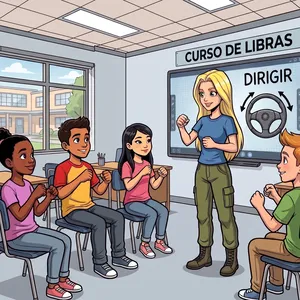
Brazilian Sign Language -LIBRASis a natural language like any other, made up of its own system of syntax, semantics and morphology. LIBRAS was recognized as a legitimate official language by the national decree (Decree number 5626 of December 2005), which promotes the construction of knowledge and the constitution of deaf identity. This is why sign language is so important in society, and not merely a practice that pertains exclusively to the deaf after all, hearing people can also learn LIBRAS as a second language.The aim of this study is to understand the process of teaching and learning Brazilian Sign Language (LIBRAS) by hearing people in the context of a technical school with deaf students enrolled in the courses, by investigating the process of acceptance of Sign Language and the implications for the process of LIBRAS acquisition. We observed classes of LIBRAS instruction in a technical school named SENAI (National Service for Industrial Learning), located in the interior of the State of So Paulo, and later research participants, including ten hearing students and one LIBRAS teacher, were interviewed using a semi-structured interview. All data that was collected was recorded using written notes (field journal), video recording and photographs. Based on the analysis of the data, we can state that despite some difficulties mentioned by the hearing students, learning LIBRAS as a second language is possible and viable. Over the period of classes, communication between hearing and deaf students improved significantly, without the need of mediation by the interpreter.
Como citar este trabalho
Direitos e uso
Os direitos deste trabalho pertencem aos autores e ao veículo de publicação original. O Libras.com.br cataloga e dá acesso ao documento, mas não define seus termos de uso: antes de reutilizar, copiar ou redistribuir o conteúdo, consulte a licença no repositório de origem.
Ver no repositório de origem