“Esse descaso vai continuar?” As lutas por reconhecimento de um povo : uma análise sociológica e comunicacional do discurso do povo surdo durante a pandemia
Resumo
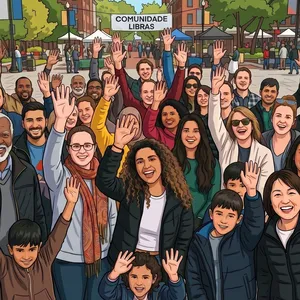
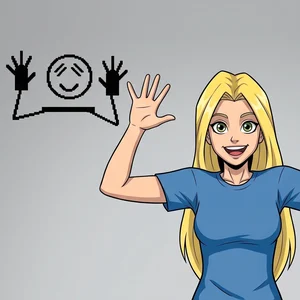
In the 21st century`s second decade Deaf People still live on the margins of society and therefore fight for recognition and rights. Their first language, the Brazilian Sign Language - LIBRAS, is not included in the school curriculum, communicational accessibility is guaranteed by law, but ineffective in practice. Such conditions reverberate in access barriers to the labor market, health services, arts, research, information, effective participation in Brazilian society, meaning the very lack of citizenship exercise, configuring itself a social problem. Up front pandemic context, as of March/2020, this situation got worse. While hearing people were bombarded with information about the new coronavirus, we observed that this content and its respective updates did not reach Deaf people, in most part they were not broadcast in Libras. The Deaf were left without access to information. In this context, this study seeks to address the researcher's concerns regarding the Deaf People’s communicational accessibility during the pandemic. The general objective is to critically analyze the discourses of Deaf Social Actors in relation to the challenges of communicational accessibility faced during the pandemic getting guided by Sociological and Communicational Approach to Discourse ASCD. This analysis is based on videos performed by those very Deaf Social Actors on the YouTube platform with evidence in claims for rights: linguistic, cultural, recognition and respect for the Deaf People. The videos in Libras were translated and presented in the written modality of the Portuguese language. For this, we are guided by the assumptions of Critical Discourse Analysis (CDA), by assuming the opposite position to actions that cause social inequalities and exclusion (FAIRCLOUGH, 2001; VAN DICK, 2008; PEDROSA, 2013; MAGALHÃES 2017; CUNHA, 2021; IRINEU, 2021). We seek to add distinct theoretical contributions, as transdisciplinarity in CDA comes from its own origin, its conception of disco...
Resumo parcial : o texto recebido da fonte está incompleto. Consulte o texto integral no repositório de origem. Abrir a fonte
Como citar este trabalho
Direitos e uso
Os direitos deste trabalho pertencem aos autores e ao veículo de publicação original. O Libras.com.br cataloga e dá acesso ao documento, mas não define seus termos de uso: antes de reutilizar, copiar ou redistribuir o conteúdo, consulte a licença no repositório de origem.
Ver no repositório de origem