Educação bilíngue e geografia nas escolas de surdos
Resumo
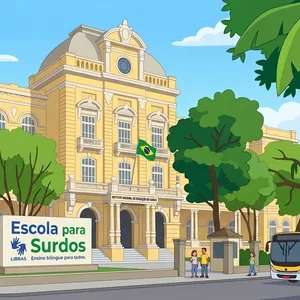
This work is about the teaching of Geography for deaf students, considering the presuppositions of Bilingual Education. The objective is to analyze the teaching of Geography in schools for deaf students using the qualitative research. We studied six schools located in the states of Minas Gerais, So Paulo, Gois, and the Federal District from 2015 to 2017. The research began after the approval of the project by the Research Ethics Committee with Human Beings, with non-participant observation. We interviewed five Geography teachers; 42 deaf students from the 9th grade of elementary school answered de questionnaires. We analyzed Pedagogical Political Projects, Decrees, and specific municipal and state laws on the offer of Bilingual Education for the deaf. We also used the Content Analysis methodology. The results show that the schools for deaf students have stories of struggle and resistance, whose inclusion policies advocate the enrollment of deaf students in the common schools. Most of the schools work in the bilingual perspective of teaching, adopting Libras as the first language and written Portuguese as a second language, as well as valuing deaf culture and bilingual teaching methodologies. They have teachers who are proficient in Libras, deaf teachers, events and cultural activities, as well as architectural adaptations, which awaken the sense of belonging in their students. However, there are still schools for deaf people who work based on the listener, since their practices do not recognize the deaf culture. They use Libras only as a means to have access to the knowledge produced in Portuguese. Meanwhile deaf students feel better in the schools for them because they identify themselves with the visual pedagogical practices, meet their peers on a daily basis and communicate in Libras. Regarding the geographic knowledge, most of the students considered that learning in the schools for the death is great, justifying that teachers communicate and teach classes in Li...
Resumo parcial : o texto recebido da fonte está incompleto. Consulte o texto integral no repositório de origem. Abrir a fonte
Como citar este trabalho
Direitos e uso
Os direitos deste trabalho pertencem aos autores e ao veículo de publicação original. O Libras.com.br cataloga e dá acesso ao documento, mas não define seus termos de uso: antes de reutilizar, copiar ou redistribuir o conteúdo, consulte a licença no repositório de origem.
Ver no repositório de origem